


Portugal voted on Sunday in a second-round presidential election to pick a successor to conservative President Marcelo Rebelo de Sousa for the largely ceremonial figurehead position.
Polls opened at 8am local time/UTC/GMT on the mainland for about 11mn eligible voters to cast their ballots in a historic runoff – the first in 40 years and only the second since democracy was restored in 1974.
The two runoff candidates
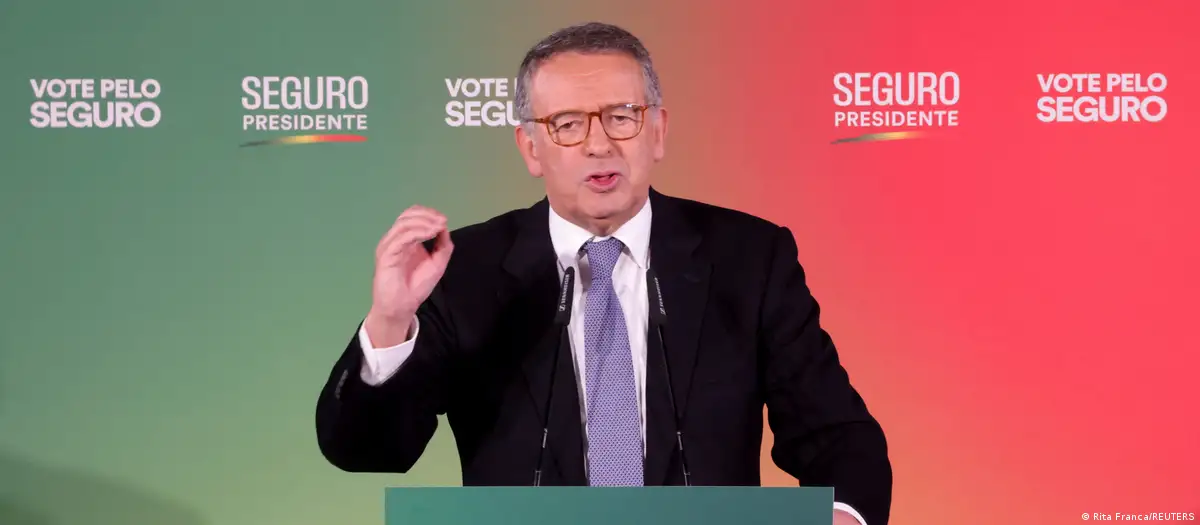
The clear favourite is 63-year-old Antonio Jose Seguro of the centre-left Socialist Party, who is expected to secure up to two-thirds of the vote.
Ahead of the election, opinion polls forecast his 43-year-old rival, right-wing populist Andre Ventura, could win around 34%.
During the first round three weeks ago, Seguro came out top, with 31% support, but fell far short of an absolute majority.
Seguro has positioned himself as a moderate who will cooperate with Portugal’s centre-right minority government.
The veteran politician returned from a teaching hiatus specifically for this race, which he has framed as a clear choice between democracy and radicalism.
This contrasts with Ventura and his Chega (Enough) party, which has quickly grown in popularity since its founding seven years ago due to its leader’s anti-establishment and anti-immigrant tirades.
The former TV sports commentator and lawyer has also pushed for tougher action on corruption and crime, promising harsher sentences for criminals, including life imprisonment and chemical castration for sex offenders.
During the campaign, Ventura put up billboards across the country saying, ‘this isn’t Bangladesh’ and ‘immigrants shouldn’t be allowed to live on welfare’. He has promised strong state support for those on low incomes, but only for Portuguese nationals.
Although Chega was founded just seven years ago, it has quickly grown to become the second-largest party in parliament following the May 18 general election.
Can political stability be restored?
Portugal’s third general election in three years marked the country’s worst period of political instability for decades. Previous administrations collapsed amid corruption and conflict of interest scandals, rising populism and unstable minority governments.
Steadying the ship will be a key challenge for the next president, especially as the centre-right Democratic Alliance (AD) coalition, with 91 seats, still lacks an absolute majority in the 230-seat parliament.
Storms force election delay
Turnout is expected to be lower than the first round, at 52%, partly due to the aftermath of severe storms that hit the country and parts of neighbouring Spain in recent days.
Around 19 municipalities have delayed the vote for a week due to flooding or blocked roads.
A call by Ventura for a nationwide postponement was rejected by election authorities.
Polling stations are scheduled to close at 7pm on the mainland and the island of Madeira, while voting on the more westerly Azores islands will continue for another hour.
The winner is expected to assume office on March 9, succeeding Rebelo de Sousa, who has led the southwestern European country since 2016.
The Portuguese president is largely a figurehead with no executive power, but can veto legislation, dissolve parliament and call early elections.
DW