

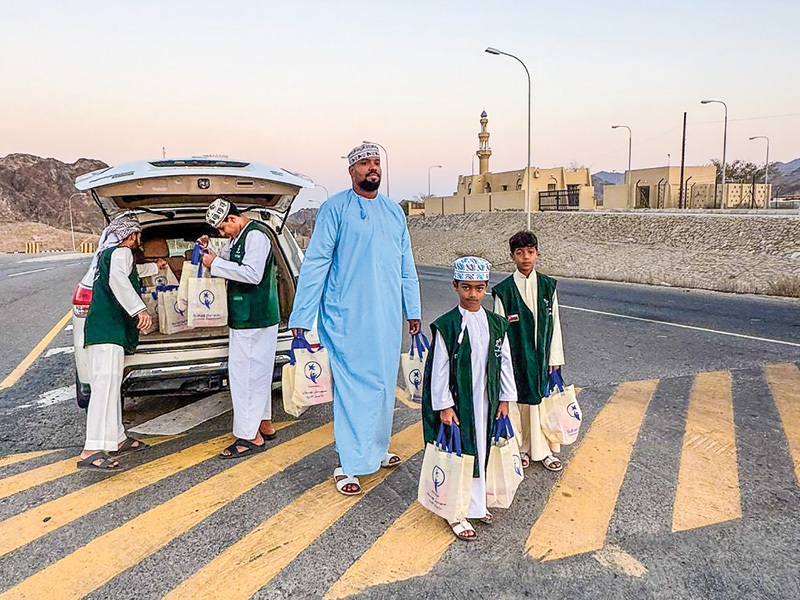
Muscat – The true spirit of Ramadan in Oman is reflected not only in mosques and homes, but in supermarkets lined with food baskets, community halls preparing for collective iftars and volunteers going door to door to ensure no family is left behind. Across the sultanate, charitable associations and grassroots teams are widening their outreach this year, responding to growing needs with structured programmes that combine immediate relief with empowerment and long-term social impact.
In conversations with Muscat Daily, leaders of volunteer organisations described a noticeable expansion in both scope and coordination, even as demand among vulnerable families continues to rise.
The Oman Association for Persons with Disabilities is continuing its annual ‘Basket of Giving’ initiative. Hassan Haider Mohammed Jawad Al Lawati, Chairman of the board, said the programme targets families of children with disabilities, providing food baskets stocked with essential Ramadan staples to ease financial pressures during the holy month. But the association’s efforts extend beyond food assistance. A collective iftar was organised on the 13th day of Ramadan for members and their families, reinforcing inclusion and strengthening community bonds.
The association is also advancing its assistive devices programme, distributing wheelchairs, hearing aids and other essential equipment to beneficiaries across the sultanate. Al Lawati emphasised that the association’s mission goes beyond seasonal charity. “We seek to promote sustainable community support for persons with disabilities and to strengthen youth engagement in volunteer work,” he said, expressing hope that Ramadan will continue to serve as a bridge of solidarity connecting all segments of society.
In North Batinah, the Shinas Charity Team has expanded its Ramadan footprint through a series of well-coordinated initiatives. Team leader Ali Mohammed Hamoud Al Amri described ‘Iftar for the Fasting’ as one of the group’s flagship annual programmes, covering several neighbourhoods in the wilayat with strong backing from volunteers and philanthropists.

A key highlight this year is the second edition of ‘Relief from Distress’, now broadened into two tracks. The first delivers direct support to families identified through field assessments to ensure assistance reaches those most in need. The second – for artisan families – focuses on empowering self-reliant households seeking to enhance their income, transforming need into opportunity and dependency into productivity.
The team is also continuing its long-running ‘Border Iftar’ initiative, launched more than a decade ago. The programme provides meals and symbolic support to travellers crossing into and out of neighbouring countries during Ramadan, reflecting Oman’s enduring culture of hospitality and compassion.
Al Amri noted that volunteer participation and donations typically surge during the holy month. “Many young people and families are eager to dedicate time to distributing iftar meals and providing assistance,” he said, describing the momentum as a powerful expression of national unity. But he acknowledged ongoing challenges, particularly in securing sufficient financial resources to meet expanding demand as the number of families requiring support grows year after year.

He also underscored the media’s role as a strategic partner in amplifying charitable initiatives and motivating broader community engagement. Volunteer work, he added, remains one of the most meaningful expressions of worship and social responsibility.
Meanwhile, the Basmatna Ghair Team in Quriyat is integrating social outreach with environmental awareness. Team leader Jihad Khalid Al Farsi said that alongside Ramadan meal distribution, the group is implementing consumer awareness campaigns aimed at reducing food waste – an issue that often peaks during the holy month.
Under the banner ‘Make Your Ramadan Green’, organised in coordination with charitable partners, the team distributes iftar meals as well as seedlings, encouraging families to plant trees and expand green spaces. The initiative connects the spirit of giving with environmental stewardship, reinforcing the idea that sustainability is a shared responsibility.
Al Farsi observed that volunteer engagement peaks during Ramadan, driven by the month’s spiritual atmosphere. However, he pointed to time management during fasting and coordination across multiple activities as operational challenges. He stressed the importance of transforming seasonal enthusiasm into sustained, year-round action and enhancing cooperation among teams to avoid duplication of efforts.