
MUSCAT — The report finds that improving economic fundamentals, particularly expansion in non-oil sectors such as logistics, manufacturing, and tourism, are reinforcing demand for high-quality, well-located assets, even as investors remain selective.
“H1 2026 is expected to reflect a market that continues to strengthen fundamentally, with opportunities emerging for investors and lenders focused on quality, sustainability, and alignment with Oman’s long-term economic strategy,” Hamptons said in the report.
Transaction activity is expected to remain measured, with investors prioritising income-generating assets offering “predictable cash flows, long lease profiles, and strong counterparties,” the report notes. Capital values are forecast to remain broadly stable, supported by improving income fundamentals and limited oversupply, although weaker assets may face continued yield pressure.
Development pipelines are also expected to remain disciplined, as feasibility studies become more sensitive to construction costs, financing conditions, and absorption risks.
Rental performance across most sectors is projected to hold steady, with modest upside in logistics, hospitality, and prime mixed-use developments.
During the second half of 2025, Oman’s main real estate centres – Muscat, Duqm, Sohar, and Salalah – demonstrated varied but complementary trends tied to their economic roles.
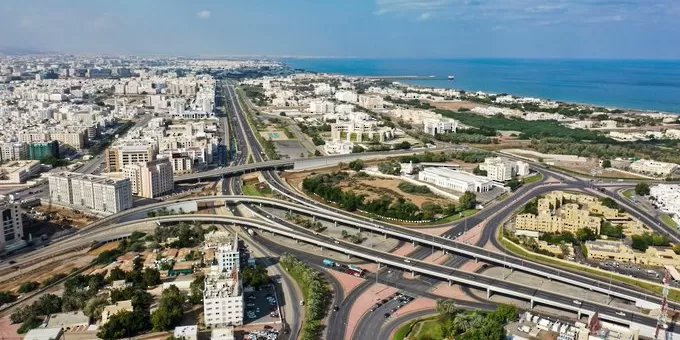
Muscat remained the country’s most active and liquid market, supported by urban regeneration and infrastructure projects. Demand increasingly favoured high-quality assets, a trend expected to continue into 2026.
Duqm strengthened its position as a strategic logistics and industrial hub, with demand centred on industrial land and port-linked developments. Growth is expected to continue but on a long-term horizon.
Sohar recorded stable performance driven by warehousing and manufacturing demand, while Salalah saw improving fundamentals in hospitality and logistics, supported by tourism growth and regional connectivity.
Oman’s broader economic performance in late 2025 was driven by non-oil sectors, aligning with the country’s Vision 2040 diversification strategy. Growth in logistics and manufacturing was supported by infrastructure investment and foreign direct investment, while tourism continued to boost real estate demand through rising visitor numbers and new hotel openings.
Inflation remained moderate, supporting affordability and consumer confidence, while stable oil prices provided fiscal visibility without overheating the economy.
“The macroeconomic backdrop entering H1 2026 supports a real estate market characterised by stability, selective growth, and increasing institutional discipline,” Hamptons noted.
Tourism-led developments
The report highlights major tourism-led projects as key indicators of evolving market dynamics, including the Al Jabal Al Aali development in Jabal Akhdar. The mixed-use project integrates residential, hospitality, and retail components within a low-density, environmentally sensitive masterplan.
Hamptons said its advisory role focused on aligning development scale with realistic demand and safeguarding long-term value.
“Particular emphasis has been placed on defining realistic target markets, controlling supply risk, and safeguarding the project’s long-term value proposition,” the report stated.
The success of established assets such as Alila Jabal Akhdar further underscores the shift toward experience-led, sustainable tourism. The resort has helped position the mountain destination as a premium leisure market, demonstrating the value of design, sustainability, and cultural integration over large-scale development.
Hospitality outlook
Looking ahead, the hospitality sector is expected to perform positively, though unevenly. Growth will be driven by asset quality, branding, and destination strength rather than broad-based market expansion.
Luxury, lifestyle, and eco-tourism segments are forecast to outperform, supported by Oman’s positioning as a high-value, low-density destination. Resort locations – particularly in Dhofar and mountain tourism hubs – are expected to see stronger gains, while Muscat’s city hotels are likely to experience stable, business-driven demand.
New supply is expected to be absorbed gradually, with limited risk of oversupply in prime segments.
Office market
The office sector is projected to remain stable but increasingly segmented. Demand is expected to concentrate on Grade A, ESG-compliant spaces, particularly from finance, technology, and government-linked tenants.
Prime rents are likely to remain steady, constrained by affordability and cautious expansion, while secondary stock may face continued pressure unless upgraded.
“The office sector entering H1 2026 is characterised by income defensiveness rather than growth,” Hamptons said, adding that performance will depend more on asset quality and tenant strength than rental increases.
Overall, the report concludes that Oman’s real estate market is entering a phase of consolidation, where long-term fundamentals, disciplined supply, and strategic alignment with national development goals will define performance.