
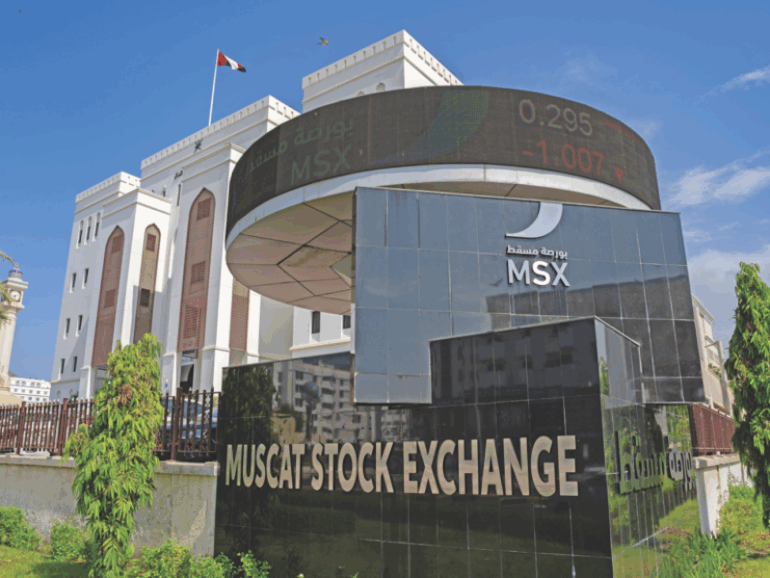

Muscat – The Muscat Stock Exchange (MSX) continued to cement its position as the best-performing capital market in the GCC, with its benchmark index recording a near 17% gain in February – one of the largest increases globally during the month.
The MSX30 Index posted the highest gain among GCC equity indices at 16.8% for February, closing the month at 7,393.4 points. The Omani bourse has maintained a strong upward trajectory in 2026, marking its eighth consecutive monthly gain.
By contrast, most GCC equity markets struggled during the same period, falling by an average of 2.5%, with declines led by Saudi Arabia and Qatar. Other markets posted only marginal gains, with Oman standing out as the clear regional leader, according to a report released by Kuwait-based Kamco Investment.
On a year-to-date basis for 2026, Muscat Stock Exchange remains at the forefront, with the index up 26%, reflecting the country’s ongoing reforms aimed at positioning it for inclusion in the MSCI Emerging Market index. The UAE followed, with Dubai and Abu Dhabi benchmarks rising by 7.5% and 4.6%, respectively.
Sectoral performance at the MSX was broadly positive, with all three sector indices recording gains. Two sectors achieved double-digit growth during the month.
The Financial Index surged 13.6%, closing February at 12,404.9 points, driven largely by share price increases in major banking institutions, including Sohar Bank (+36.6%) and Bank Muscat (+18.0%).
The Services Index also performed strongly, rising 13.8% to close at 2,882.6 points. Meanwhile, the Industrial Index posted a single-digit gain of 7.1%, finishing the month at 9,645.6 points.
Among individual stocks, National Aluminium Products topped the gainers list with a remarkable 123% rise in its share price. It was followed by Raysut Cement (+65.9%) and Sohar International Bank (+36.6%). On the downside, Al Batinah Development & Investment Holding led the decliners with a 15.6% fall, followed by Al Madina Investment Holding (-11.1%) and Takaful Oman Insurance (-7.4%).
Trading activity surges
Trading activity on the exchange showed significant momentum during February. The total volume of shares traded rose 38.6% to 4.7bn shares, up from 3.4bn in January. The total value of shares exchanged climbed 58.4% to RO1.3bn, compared with RO814.2mn in the previous month.
Sohar International Bank topped the monthly value-traded chart with RO1.2bn in transactions, followed by OQ Base Industries with RO887.9mn and Bank Muscat with RO463.5mn.
The Kamco Investment report also highlighted Fitch Ratings’ recent projection that Oman’s current account deficit is expected to widen to 3.3% of GDP in 2026, up from an estimated 2.6% in 2025.
Fitch attributed this to a narrowing goods trade surplus and a growing deficit in the services sector. The agency noted that lower energy prices may limit growth in export receipts, while the accelerated expansion of the non-hydrocarbon economy is expected to increase imports of both goods and services.
According to the report, Omani authorities are likely to finance the deficit through debt issuance, with foreign exchange reserves projected to remain well above pre-pandemic lows, providing a buffer against potential volatility in external accounts.